Reefer Freight: What Shippers Need to Know Before Booking Temperature-Controlled Loads
Reefer (refrigerated) freight requires temperature-controlled trailers, tighter transit windows, and compliance with food safety rules…

In this report 7 sections
Quick answer: Reefer (refrigerated) freight requires temperature-controlled trailers, tighter transit windows, and compliance with food safety rules that standard dry van freight does not — all of which show up as a real cost premium over standard truckload rates.
Temperature-controlled freight looks like a specialized niche until a shipper actually needs to move it, at which point the pricing, equipment, and compliance differences from standard dry van freight become very real very quickly.
Why Reefer Freight Costs More
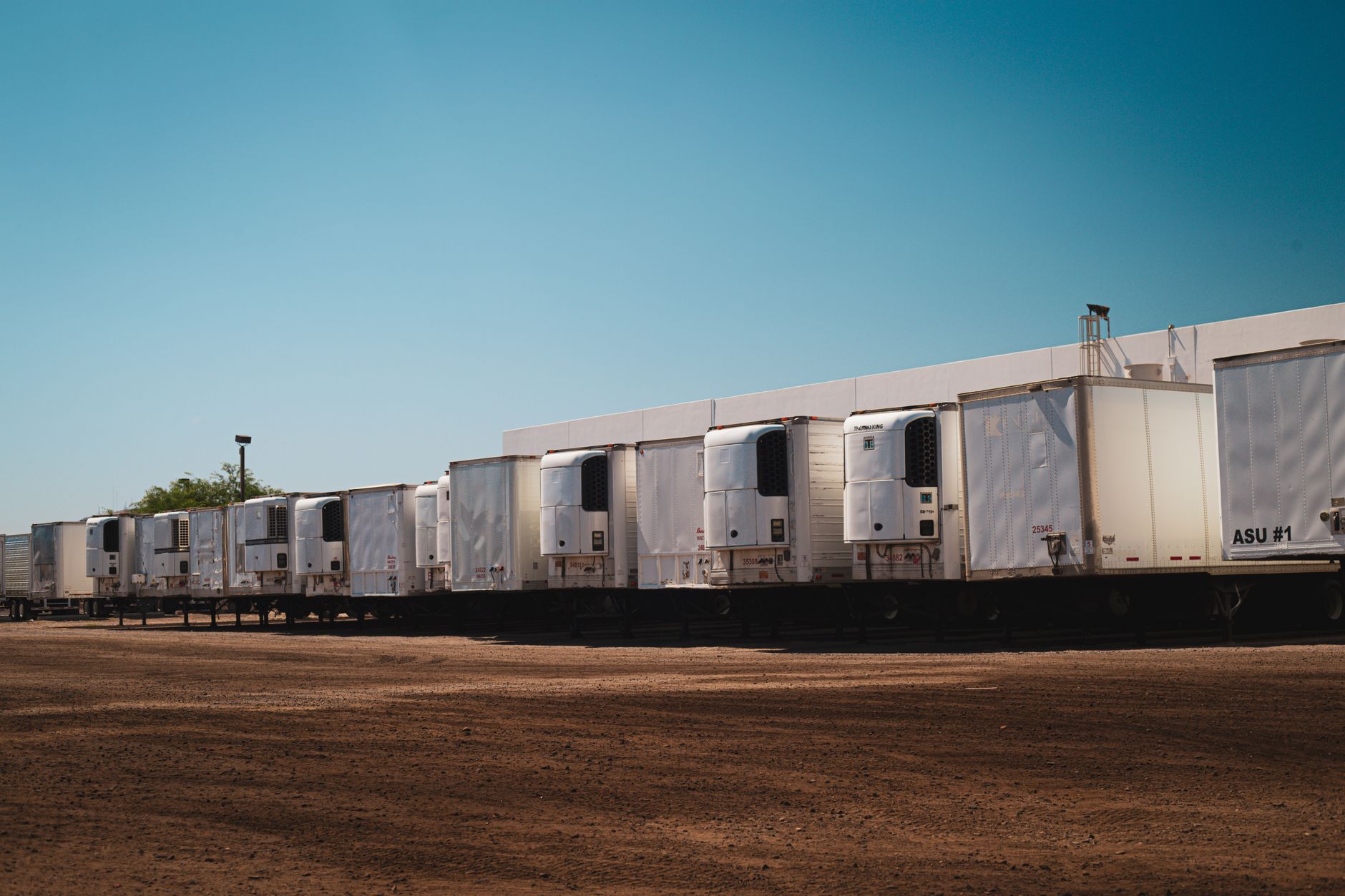
Refrigerated trailers cost more to purchase, maintain, and fuel — the reefer unit itself burns diesel independently of the truck engine to maintain temperature, adding a real ongoing operating cost that dry van freight does not carry, and that cost flows directly into the quoted rate.
Reefer capacity also tightens seasonally around major produce harvest cycles, when demand for temperature-controlled trailers spikes regionally and rates can move sharply above their off-season baseline.
Compliance Isn't Optional

Temperature logging throughout transit is both an operational best practice and, for food products, a compliance requirement under FSMA's Sanitary Transportation rule, which the FMCSA and FDA jointly enforce. A shipment that arrives outside its required temperature range without documentation can be rejected outright at delivery.
Chain-of-custody documentation — who handled the freight, at what temperature, at each transfer point — matters more here than in standard freight, since a temperature excursion dispute often comes down to whose custody the product was in when the deviation occurred.
Pre-Cooling Is the Detail Inexperienced Shippers Skip

A reefer trailer needs to be pre-cooled to the target temperature before loading begins, not cooled down after freight is already inside — loading warm product into a trailer still cooling down creates a temperature gradient that can compromise the whole load, not just the freight near the doors.
Confirming pre-cooling as an explicit requirement with the carrier, not an assumption, avoids a dispute later about who is responsible for a temperature excursion that started at the loading dock rather than in transit.
What This Means Day to Day
For most teams working on reefer freight shipping, the theory matters less than what changes on Monday morning — recent government data on this front only tells part of the story. Laneage hears from readers in logistics roles who are less interested in the abstract policy or strategy debate and more interested in what specifically to check in their own operation this week — a contract line, a packing checklist, a supplier conversation.
Nicole Farr's own reporting on this beat, cross-checked against industry reporting from outlets that track it closely, keeps coming back to the same pattern: the shippers and planners who do best are the ones who treat reefer freight shipping as a recurring line item to monitor, not a one-time decision made once and never revisited. That single habit — building a short recurring review into an existing planning cycle rather than creating a new standalone process — tends to matter more than any individual tactic covered above.
It also helps to name an owner. A lot of the mistakes Laneage sees on this beat do not come from a lack of information — the guidance above is not obscure — they come from nobody on the team being explicitly responsible for checking it on a regular cadence. If reefer freight shipping touches more than one department, put one name on it, even if the actual work stays distributed, so a slipping metric or an expiring exception has somewhere to land before it becomes a bigger problem. Our wider coverage of this beat has more on how other teams have split that ownership.
Where to Start This Week
Working through everything above in one sitting is not realistic for most teams, so it helps to prioritize. Here is a rough order of operations based on what Laneage typically sees pay off fastest:
- First: Reefer trailers cost more to operate, which shows up directly in the freight rate — this is usually a manageable first step even for a team without a lot of spare bandwidth, and it tends to surface pretty quickly whether the rest of the process needs a bigger rework or just a tune-up.
- Next: Temperature logging and chain-of-custody documentation are compliance requirements, not optional extras — this is usually a manageable first step even for a team without a lot of spare bandwidth, and it tends to surface pretty quickly whether the rest of the process needs a bigger rework or just a tune-up.
- Then: Reefer capacity tightens seasonally around produce harvest cycles — this is usually a manageable first step even for a team without a lot of spare bandwidth, and it tends to surface pretty quickly whether the rest of the process needs a bigger rework or just a tune-up.
- Then: Pre-cooling the trailer before loading is critical and often skipped by inexperienced shippers — this is usually a manageable first step even for a team without a lot of spare bandwidth, and it tends to surface pretty quickly whether the rest of the process needs a bigger rework or just a tune-up.
- Finally: FSMA food safety rules apply directly to temperature-controlled food freight — this is usually a manageable first step even for a team without a lot of spare bandwidth, and it tends to surface pretty quickly whether the rest of the process needs a bigger rework or just a tune-up.
None of these steps require a large budget or a new system to start — most of the value comes from someone actually sitting down with the current process, the current supplier or carrier agreement, or the current data, and checking it against what is outlined above rather than assuming it already matches. Teams that skip straight to a technology purchase before doing this basic review tend to automate an already-broken process rather than fix it.
It is also worth revisiting this list on a set schedule rather than treating it as a one-time cleanup — our broader operational playbook covers how to build that review into a planning calendar. Conditions on reefer freight shipping shift — new suppliers, new regulation, new competitive pressure — and a checklist that was accurate a year ago is not a guarantee it still is today. See also our related coverage for how this connects to the rest of the beat.
Bottom Line
Reefer freight is a specialized mode with real cost and compliance differences from standard truckload — shippers who treat it like dry van freight with a colder trailer tend to discover the differences the expensive way, through a rejected delivery or a documentation dispute.
Laneage will keep tracking this topic as conditions change, and readers working through it in their own operation are welcome to reach out through the site with questions this piece did not cover.
Frequently Asked Questions
Why does reefer freight cost more than dry van?
The refrigeration unit runs independently and burns its own fuel to maintain temperature, adding a real operating cost carriers pass through in the rate.
What happens if a reefer shipment arrives outside its temperature range?
It can be rejected at delivery, particularly for food products under FSMA compliance requirements, which is why temperature logging throughout transit matters.
What is pre-cooling and why does it matter?
Pre-cooling means bringing the trailer to target temperature before loading begins — loading warm product into a still-cooling trailer can compromise the entire shipment.
Laneage covers the operational and policy side of moving goods — from the dock to the border, and from the warehouse floor to the fulfillment center. Nicole Farr reports for Laneage on this beat, drawing on conversations with shippers, carriers, and compliance teams working through these exact questions every week.